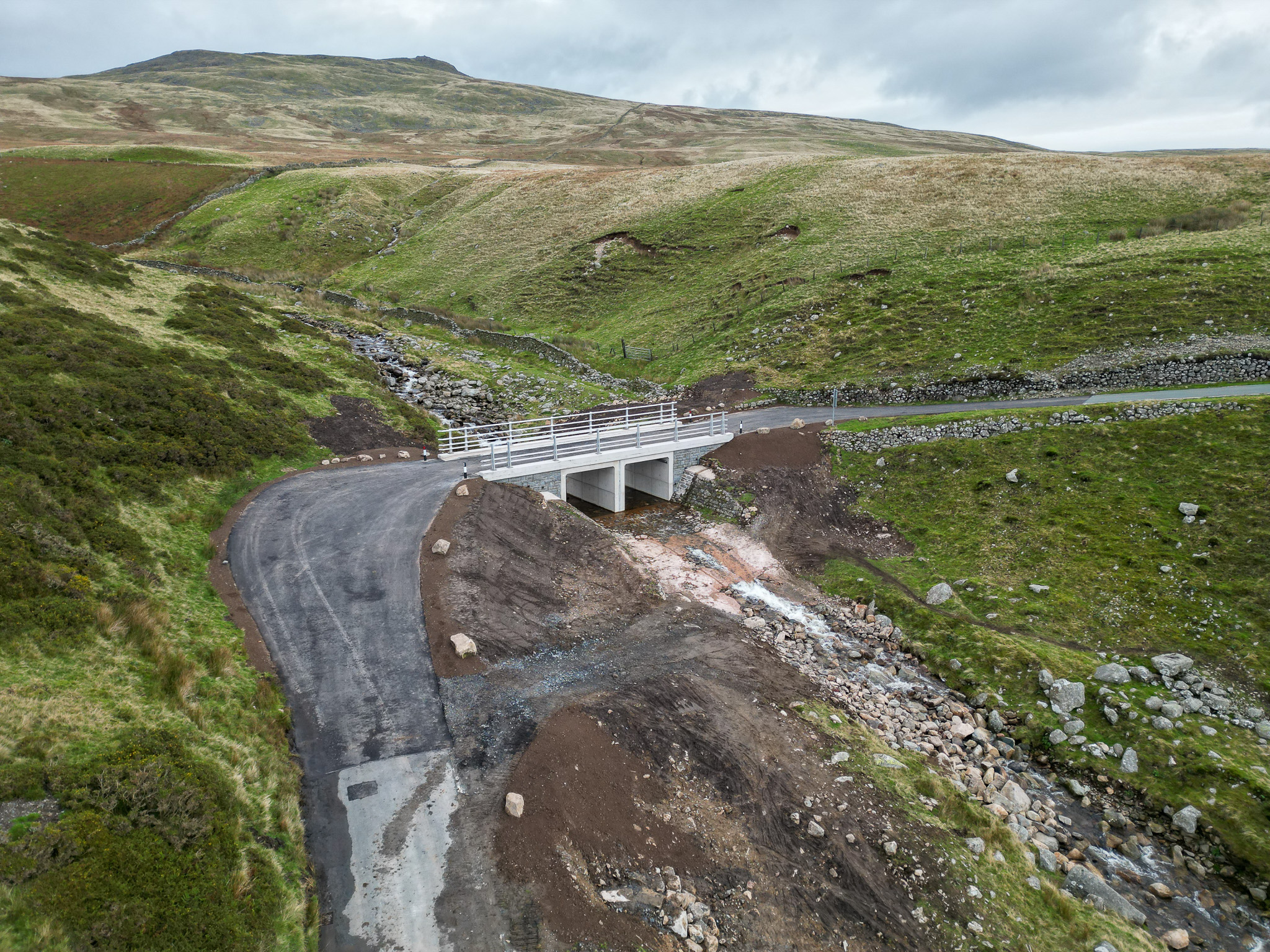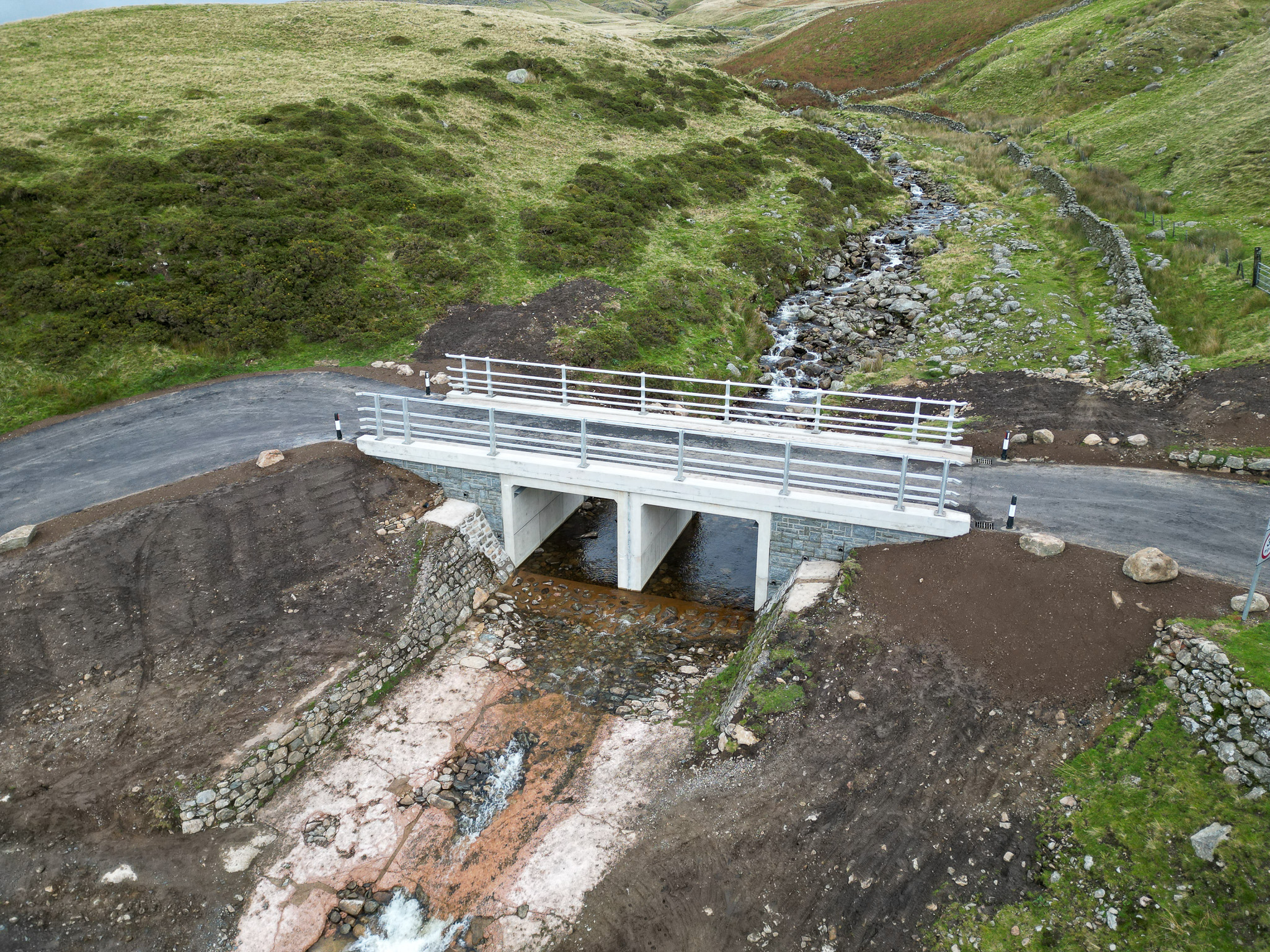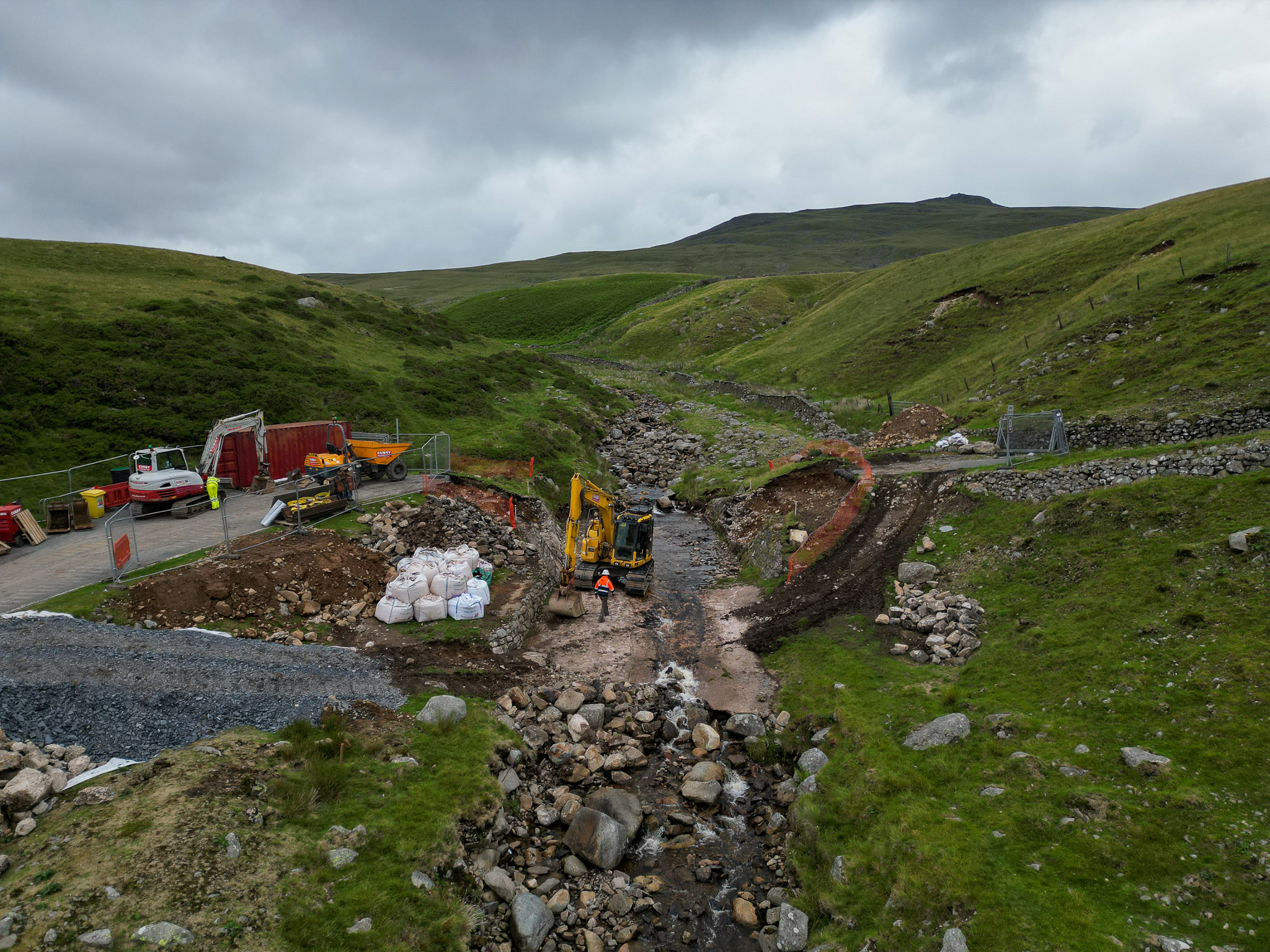
Cubby Construction successfully delivered the replacement of Buckbarrow Bridge, a vital rural infrastructure link on the U4064 County Road, which spans Buckbarrow Beck.
The original structure was demolished due to structural concerns and limited capacity, necessitating a full replacement that meets current design and safety standards.
The scope of works included:
- Construction of a new pre-cast reinforced concrete box culvert structure
- New concrete reinforced scour slab with stone pitching to prevent undercutting of the new structure
- Reinstatement of abutments with no-fine concrete to facilitate drainage and support road approaches
- Removal of existing abutment pad foundations
- New construction of stone-clad wing walls to tie into the existing environment
- Partial (and where required, full) removal of existing training walls, followed by reinstatement as per the design specification.
- New cast-in-situ concrete bridge deck with reinforcement
- Installation of N2-rated aluminium parapets
- Reprofiling North and South bridge approaches with new asphalt and chip surfacing
- Reprofiled the downstream river bed to allow a smoother transition of the watercourse
- Reinstatement of the riverbed to its original state with existing riverbed material to encourage fish habitat
For this river bridge project, careful planning and risk management were essential due to the challenging site conditions and environmental constraints.
The works were required to be completed within a restricted seasonal working window, with in-river activities and bridge installation programmed for early summer 2025 to comply with environmental requirements.
Programme flexibility and contingency measures were incorporated to accommodate potential changes arising from weather conditions or unforeseen site constraints. The project was classified as notifiable under the CDM Regulations, and an F10 notification was submitted due to the scale of the works and workforce involvement.
Site accessibility presented a significant challenge, with the riverbed terrain and limited transport routes requiring the creation of temporary turning areas and a graded access ramp into the channel to facilitate safe plant and material movement.
The location also formed part of a popular cycle and pedestrian route, requiring ongoing management of members of the public, cyclists, and tourists.
In addition, fluctuating river levels posed a continual risk, particularly following periods of heavy rainfall. To mitigate the hazards associated with in-river working, pumps were installed and water management measures implemented to maintain safe working conditions throughout the construction phase.
The new bridge structure will support the continued connectivity of this rural route, ensuring safety and resilience in a challenging topographical and environmental setting.